Case Study:
The Eiderdown Jacket
as System of Staging
Research Context
I first encountered Charles James’ Eiderdown Jacket through the research of Dorothea Mink during my studies. Her work on James foregrounded the garment not as an isolated design object, but as a complex construction of form, labour and representation.
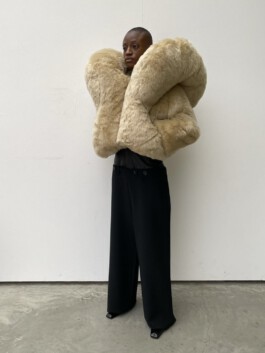
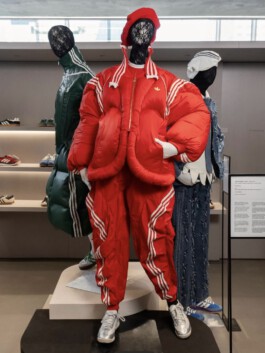
Since then, I have been collecting images of jackets that reference or echo the Eiderdown Jacket across fashion imagery, exhibitions and editorial contexts. This ongoing archive functions as a visual research tool, tracing how a single garment continues to circulate, mutate and reappear within contemporary fashion systems.
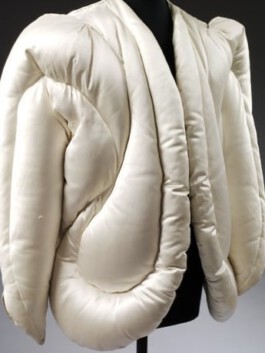
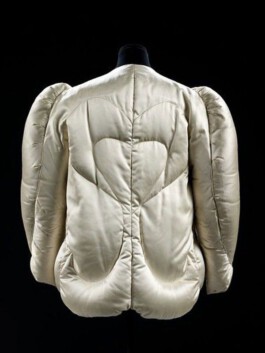
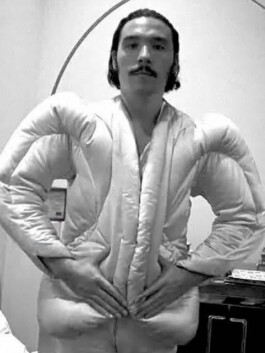
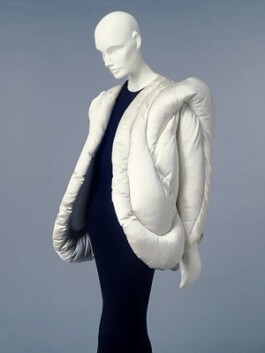
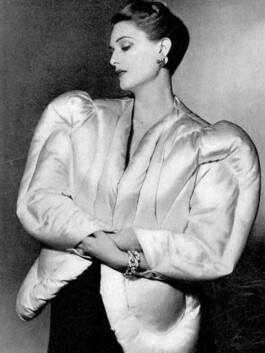
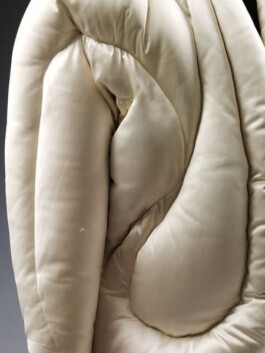
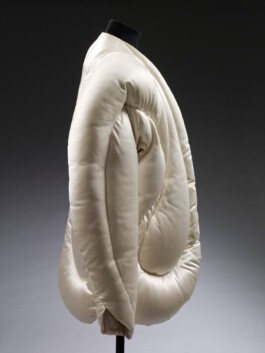
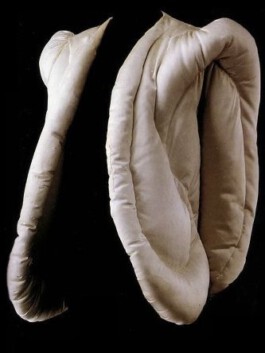
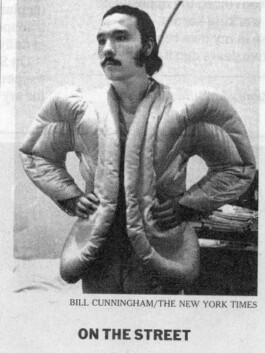
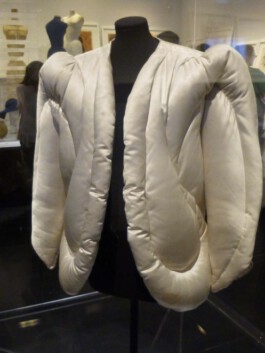


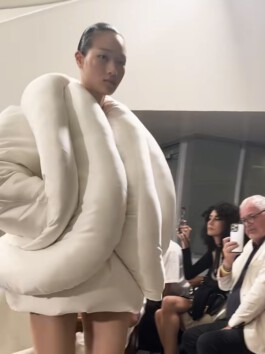

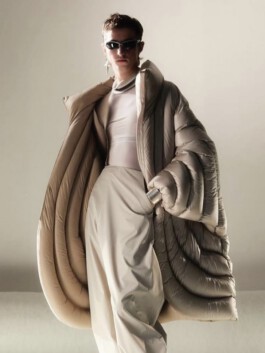
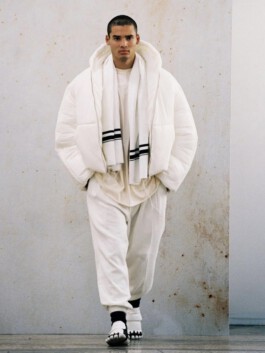


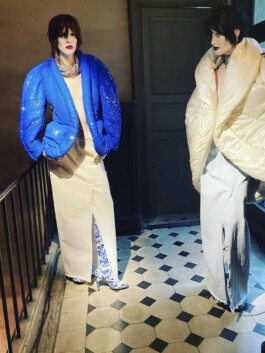

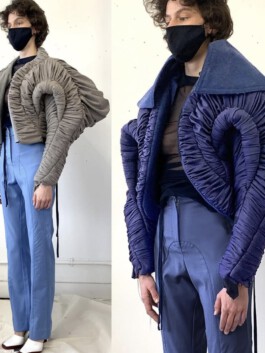
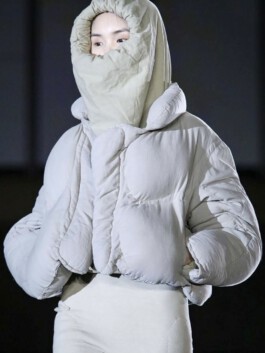


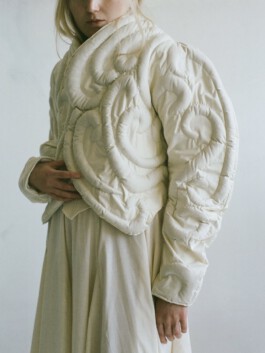
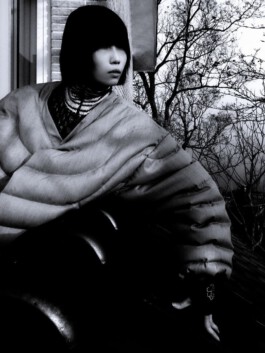

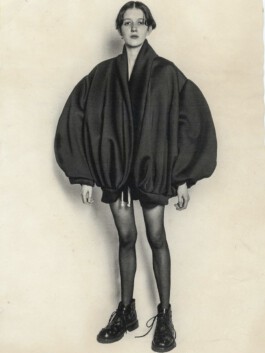
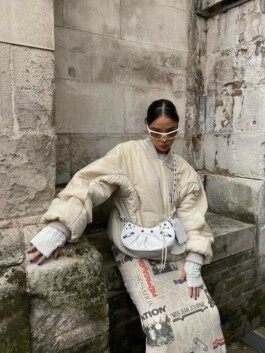
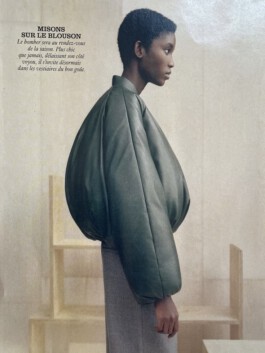
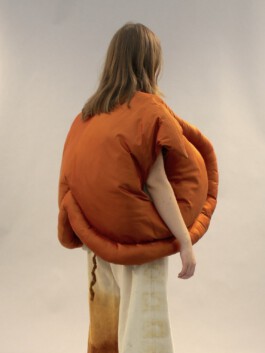

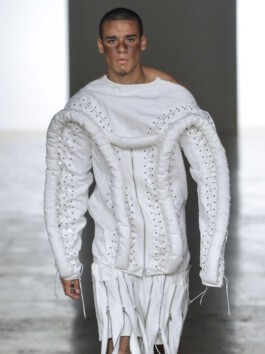

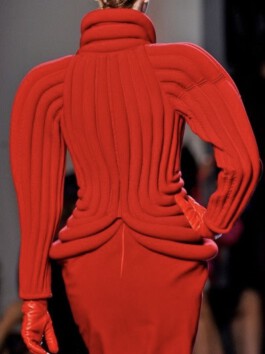
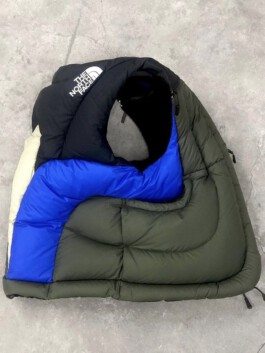

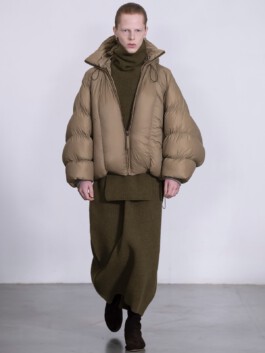
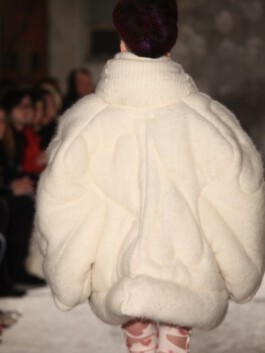
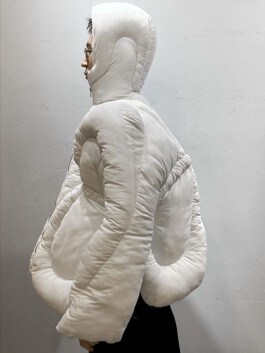
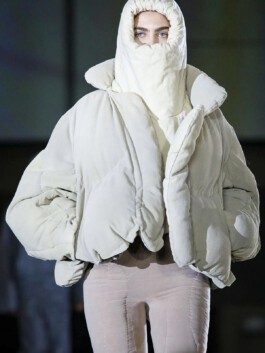
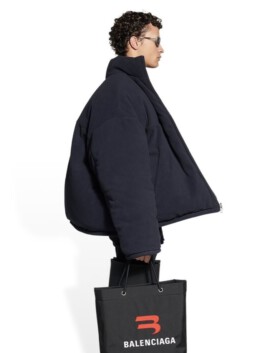
Left: Eiderdown Jacket, Charles James (1937)
Right: Recurring references
Research Position
The Eiderdown Jacket (1937) by Charles James is approached here not simply as a garment, but as a system of staging in which making, image production and institutional framing operate together to produce authority. Its relevance lies less in wearability than in its capacity to reorganise relations between body, labour and representation.
The jacket mobilises excess of volume, weight and insulation as a scenographic strategy. Rather than enhancing the body, it displaces it. Labour is not made visible through transparency; instead, it becomes perceptible through material density and disproportion. In this sense, invisibility in fashion appears not as an accident, but as a structural condition.
Authority emerges through controlled circulation. Sketches, photographs, museum displays and editorial sequencing transform an idiosyncratic object into a canonical reference, while its meaning remains open and unstable. The garment’s status is not fixed; it is continuously reorganised through systems of representation.
Within exhibition and publication contexts, the jacket is not neutralised. Its function shifts from use to demonstration. It operates as a site where fashion can be examined as a constructed system rather than a finished product.
As such, the Eiderdown Jacket becomes a productive case for practice-based artistic research. Making is understood not as reproduction, but as a critical method through which fashion’s mechanisms of legitimacy, aesthetic intensity and visibility can be analysed and reconfigured.